US Army 2005-2018
OH-58D Pilot, PSYOP Officer, Strategist
BIOgraphy
Born in 1981 in Northeastern Pennsylvania, and adopted by her parents, Mary and John Barlieb, Anne grew up in Tobyhanna, PA. Active in sports, arts, music, and the community, Anne was a member of the Coolbaugh Township Volunteer Fire Company and a parishioner at St. Ann’s Catholic Church where she played the flute regularly for services and special occasions. While in college at Marywood University, Anne worked at Tobyhanna Army Depot as an office clerk for the Directorates of Avionics and Satellite Communications.
Anne also participated in ROTC at the University of Scranton and completed Airborne School in 2001. Graduated in 2005 with a BA in Criminal Justice and MA in Public Administration, Anne commissioned into the Army and attended flight school where she learned to fly the OH-58D Kiowa Warrior, the Army’s scout/attack platform. In 2007-2008, during an 18 month deployment to Iraq in support of Operation Iraqi Freedom with the 4-6 Air Cavalry Squadron (ACS), Anne served as a platoon leader and air mission commander flying close air support missions and providing convoy security in Northern Iraq, Mosul and Talafar.
In 2009, she transferred to Psychological Operations (PSYOPS) with her then husband and fellow Army Officer. Married for five years while on opposite deployment cycles, they rarely saw each other. Shortly after their branch transfer and co-location at Ft. Bragg (now Ft. Liberty), the marriage dissolved. Anne then deployed to Qatar in support of Operation New Dawn for eight months and upon her return began experiencing health issues. After an arduous, year-long diagnostic process, a golf-ball sized pituitary tumor required an emergency surgery in 2011. Three years later, Anne graduated from the Command and General Staff College (CGSC) in Ft. Leavenworth, KS. While there, her health deteriorated again. In January 2015, after a very violent suicide attempt, Anne was MEDEVACd to Walter Reed where doctors diagnosed 13 medical conditions, including nerve damage and regrowth of the pituitary tumor, making her unfit for continued military service.
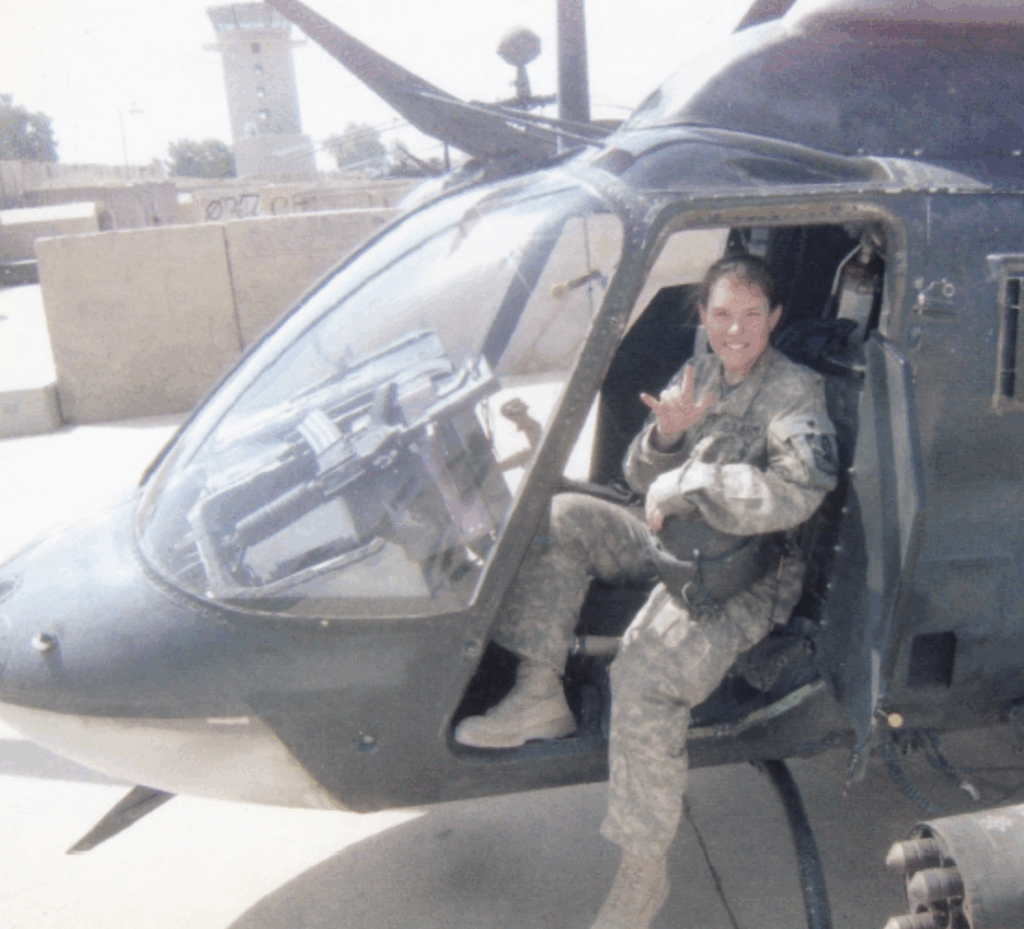
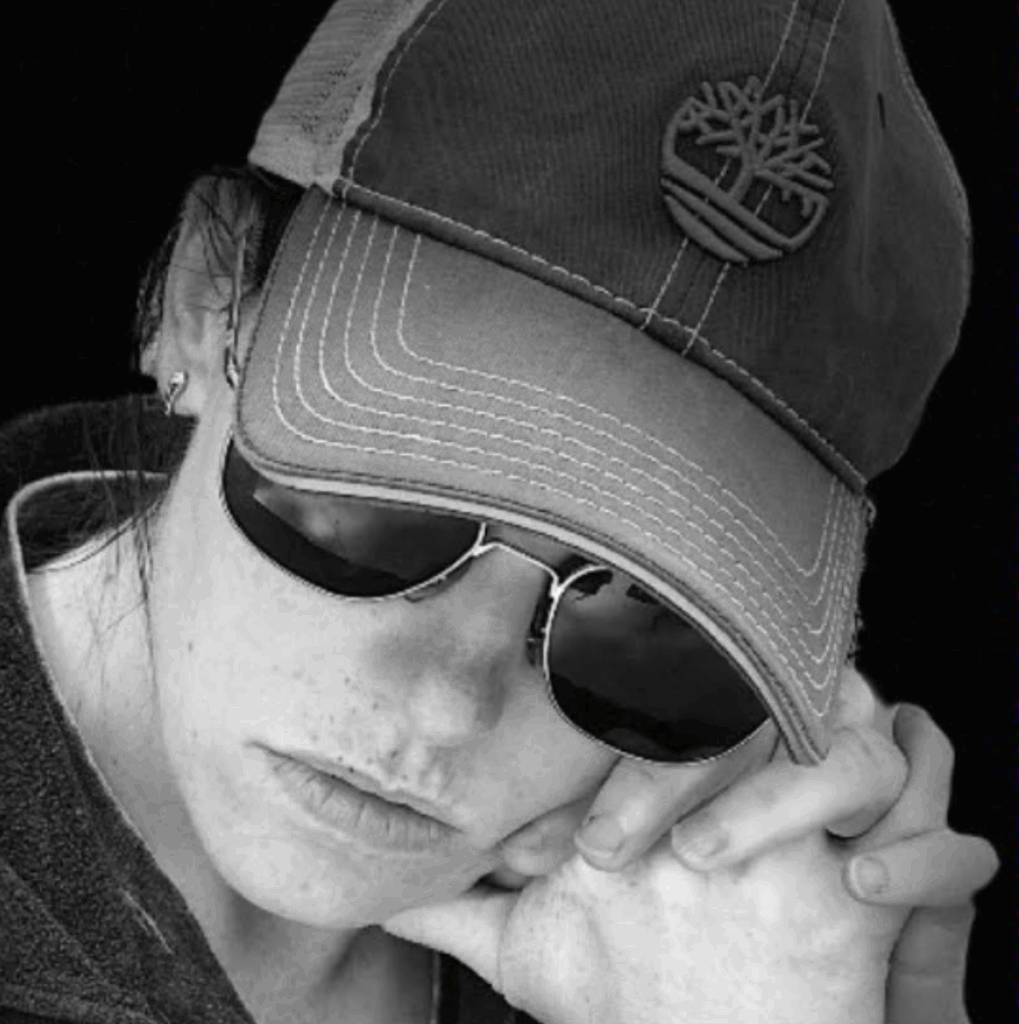
After a grueling three-year medical board process, Anne retired in 2018 with 14 years of honorable service. Through a cascade of miraculous synchronicities that same year, she was reunited with three biological sisters and found herself on a most unexpected, deeply personal path of healing and self-discovery. Since then, Anne dedicates much of her time to mentoring service members, veterans, and family members with her experience-based approach to complex medical issues, PTSD, family dynamics, suicide, and non-combat related trauma. When she is not at Walter Reed at appointments or mentoring, she can be found writing in one of many community writing groups during the week; taking a daily walk, nap, and bath; reclined in her heated massage chair watching the bird feeder on her balcony and feeling very grateful to be living her best life. In 14 years of service, Anne received the Defense Meritorious Service Medal, Air Medal, Army Commendation Medal, Army Achievement Medal, Parachutist Badge, Aviator Badge, and Combat Action Badge.
Career and Family Transitions
“My addiction was working out and workaholism, which is almost a worse addiction to have, because it’s not as criminalized or criticized. I mean, workaholism in our culture is celebrated; you’re considered productive and useful and wonderful, but I was really working myself, both physically in the gym and at work— So we had a lot in common, in terms of our dysfunction, but it expressed itself differently.”
The Design of the Universe
“So like war, and I went through that whole, kind of, arc where I wanted to change everything about the war, and it should have never happened, and everything went terribly, horribly, completely wrong. And then through that therapy, I came to accept that, no, everything is going completely and totally perfectly right, even if I don’t exactly understand it. So when I meet cadets like here and have an opportunity to talk to them, I’m grateful to be past that arc where I’m much— in a greater position of acceptance and wisdom. I don’t discourage anyone from wanting to join the service and go to war if it’s necessary.”
Financial Incentives
“It’s funny, when I was a captain in Iraq and I was making the most money I’d ever made in my life, Congress came out with this appropriation or bill that if a service member was over their orders, any month over a year’s worth of orders, they were going to do a thousand-dollar payment. So I was getting my regular captain pay, which I got promoted in theater, so that was a pay up. I was getting hazardous duty pay, I was getting flight pay, I was getting a thousand dollars because we were there for eighteen months, a thousand dollars a month extra. I was making more money in my life than I’d ever made before, and when I got home and I was bragging to my father about how great it felt to be making all this money, he sat down with his yellow legal pad, and he ran the numbers for me and asked what hours I was working, and he figured this out to something like— it came out to, seriously, like $3.75 an hour is like what the hourly rate was for this, and it burst my bubble in a big way. Now, he didn’t take into account the medical insurance, and that’s a whole thing, and there’s many other unquantifiable financial incentives to the military, unquestionably. But when I think about what I was expected to do, and the shifts— You know, we would run thirty-six hour shifts in the TOC [Tactical Operations Center] when there was direct actions going on.
Some people could argue, ‘You can never pay service members enough for what they do, there’s no amount of money that you could pay,’ but I feel like, certainly, the incentive should be greater for what we expect, for what service members have to do, and that’s not to complain about what we have; like I said, I’m very grateful. I’m not saying that from an ungrateful place, I’m saying it from a very grateful place and acknowledging that it should be more.”
The Most Life-Changing Experience
“And when I thought about those two trajectories kind of converging in this indescribable experience, and they say about how there’s no greater sacrifice than to lay your life down for someone. And on a spiritual plane, when I think about that little boy and the sacrifice—and I’m not saying that he knowingly did it, or if he was given the choice that he would have volunteered to do that—but what it allowed me to do, going through that experience and processing it and thinking about it and praying about it and the realization that I’ve had since, it’s quite an incredible thing to consider that my life orchestrated things in such a way to give me realizations and life experience that— and really, ultimately, wisdom.”
“They say, and I think I mentioned it before, the mark of a life well lived is one in which the liver of it, the one living it, changes fundamentally, and if I had to name one experience that fundamentally changed who I am, it’s that experience. And it still torments me, I’ve got severe combat-related treatment-resistant PTSD. I have flashbacks. It’s difficult to live with, many of the things, but it changed— It fundamentally changed the way that I orient myself to life, my perception, the way I understand things. It’s kind of like on a multidimensional, very metaphorical, poetic. . . I think only the most intense life experiences allow us to straddle that effectively, and war does that. War certainly has that effect, if someone’s willing to do the labor required to get themselves to that point, which is the hardest work there is.”
Invisibility
Jason A. Higgins: A lot of women veterans have expressed in one way or the other feelings of invisibility. Has that ever been relevant to your experience?
Anne Barlieb: I think it’s an illusion to think that we can really see each other.
Anne Barlieb: There’s three stages of care or concern. It’s sympathy, kind of being the most rudimentary; empathy— so sympathy is feeling bad for somebody; empathy, which is kind of commiserating with being on the same field; but then, compassion’s kind of the gold standard. And compassion would say, I can’t put myself in your shoes, I can’t see— I can’t really see you. And from that standpoint, yeah, but, I mean, that’s the thing that we all have in common is that we’re invisible, and something that— I don’t know, being a woman in the military never really resonated with me. You know, a lot of times, people— I mean, men have just as many issues, I think, when it comes to the human condition— it’s not to minimize the women’s experience or anything like that, or minorities, or anything, I don’t want to discount that —but the real fundamental truth is that we are all equal. PTSD, I like to say, is the least common denominator in the human experience. Nobody, I don’t care how good life looks, I don’t care, you’re not going to convince me that there’s not torment, tragedy, and unthinkable circumstances. That’s something that we all have in common, period . . .
Finding Metaphorical Meaning
“It’s like operating on multi-dimension quantum field consciousness that, okay, there’s the literal thing of black-wearing-pajama ISIS, and I could tell you briefs about the characteristics of that and what their TTPs are, but then fifteen years later, I get introduced to this whole new concept that I didn’t even see coming about Isis and this goddess, and I think, “Well, now, what does that mean if I was at war with a goddess named Isis? And what am I to learn about that and to have discovered? And can both be equally real and important and relevant in my life?”
A Pinnacle of Human Experience
“One of the challenges of service is that you really are performing at a pinnacle of human experience. There’s no greater high than the adrenaline rush of getting steel on target, everything synergizing and coming together, and neutralizing a target that really makes a difference. And I think it can be really tough then to come back to normal life and go grocery shopping and try to— I think I’ve heard other people, astronauts; how do you go to the moon and look at the Earth from a distance and then come back and live— enjoy everyday life?”
“To This Day, I Can’t Watch The News”
“I started to really struggle with how much control do we have over— It’s, again, fate versus free will. Like, well, can you really make a decision based on something that’s not— that’s been— information that’s been manipulated or exploited?
And so the more I learned, the more, kind of, vulnerable I became to concern over my own sovereignty over thinking, and so I— I ended up not being— And to this day, I can’t watch the news.
I went from a job where I was literally briefing the three-star commander on all the heads of state, key principles, policy, you name it—I worked in a SCIF, a Sensitive Compartmentalized Information Facility, with wall-to-wall TVs, with news, world news, international, I mean all the things, major headlines, constantly tracking data—to literally not being able to watch the news because the narratives, I was constantly wondering about how it fit into different things and what shaping operations were, and it really got messy.
And so I made a promise to myself when I was at Walter Reed that if something needed— I needed to know something, it had to be delivered within arm’s reach, like in the flesh.”
Takeaways from Anne’s Lived Experience
Jason A. Higgins: For people who may watch this interview, whether they be the public or students, or another veteran, what’s the takeaway from your lived experience? What do you want people to learn from it?
Anne Barlieb: I think— Well, the first thing that comes to mind is I would love them to learn whatever it is that they are meant to learn. And I don’t think that I would know that, I don’t think— I don’t know if I mentioned it here or not, but I had a mentor early on say to me that corn knows how to become corn. Did I mention that? So the idea is that corn does not need any special instructions or something. You know, you plant a seed of corn, you don’t need to go out there and stand over the soil and tell it, “You’re corn, you’re doing a good job, you know how to do it, a little bit this way, a little bit that way.” It knows. It’s all in the seed. It’s well prepared. It’s going to be corn. It’s going to be perfectly fine. And that’s how I feel when I encounter people.