US Army, 1977-1980
Motor Transport Operator
Biography
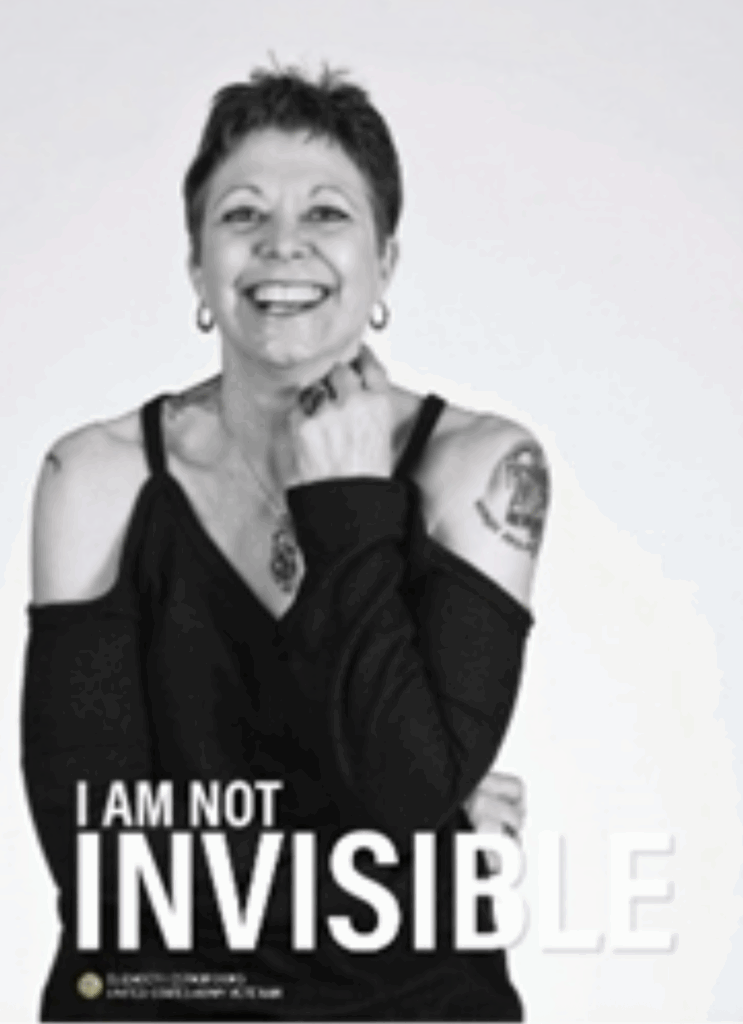
Elizabeth Estabrooks is a retired executive who spends her time volunteering and writing. Prior to retiring, she served as the Deputy Director at the Department of Veterans Affairs (VA) Center for Women Veterans (CWV) in Washington, D.C. where she served as the subject matter expert on women veteran issues, concerns, and needs, advocating in favor of changes that improved safety and equity for women veterans. In 2021 – 2022 she led the production of two Congressionally mandated studies: 1) Study on Unemployment Rate of Post 9/11 Women Veterans and 2) The Prevalence of Intimate Partner Violence in the Veteran Population. Ms. Estabrooks envisioned and implemented the development of a first-ever VA woman veterans’ survey to identify and understand low rates of VA benefits and healthcare usage by women.
Prior to assuming her role as Deputy Director, Elizabeth served as the first Oregon Woman Veterans Coordinator with the Oregon Department of Veterans Affairs where she brought decades of knowledge and experience gained from her career working on relevant issues that included: domestic violence, (military) sexual assault, peer support services, community safety, and gender- and culturally responsive services. In 2017, she co-founded the I Am Not Invisible campaign and photo project for women veterans, which became a national project headed Center for Women Veterans, with over 4,000 women veterans in 50 states and 29 tribes being photographed by 2024.
Her earliest foray into the field of violence against women was first as a board member and then Executive Director of MayDay, Inc., Baker County’s domestic and sexual violence crisis intervention center from 1993 – 1997, where she changed the law enforcement culture against arresting offenders and obtained funding for the first ever community shelter. Later, as an independent consultant, she advised clients that included the Office of Juvenile Justice and Delinquency Prevention; Oregon Department of Human Services; Oregon Department of Public Safety Standards and Training; Battered Women’s Justice Project; Mental Health Partnerships of Pennsylvania; and the Edmonton Police Department in Edmonton, Alberta, Canada.
Elizabeth is a Peacetime Cold War Veteran of the United States Army who served at Harvey Barracks in Kitzingen, Germany. She is a Summa Cum Laude graduate of Eastern Oregon University with a Bachelor of Science degree in Gender Studies and Political Science and holds a Master of Science in Social Work (Policy) from Columbia University in New York. She was appointed to the VA Secretary’s Task Force on Inclusion, Diversity, Equity and Access in 2021 and the VA National Domestic Violence Task Force in 2012 and was a 2013 Fisher-Cummings Washington, D.C. Fellow.
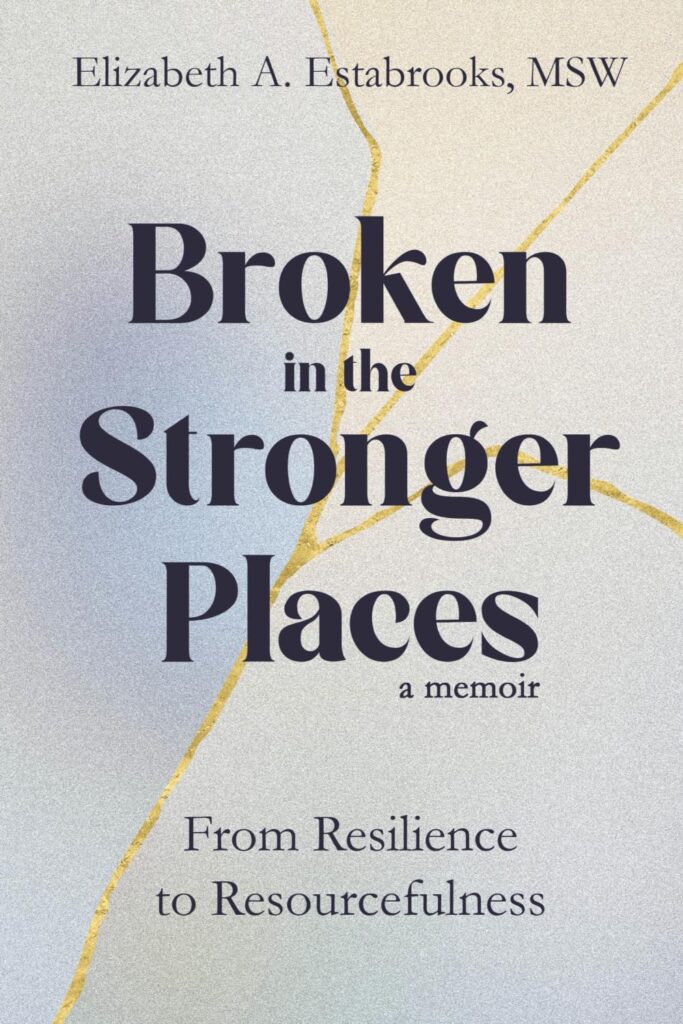
She now travels and focuses on writing. Her first book, Broken in the Stronger Places: From Resilience to Resourcefulness, is a memoir that spans her life from joining the military through her exit from the VA and the one-year solo healing road trip that followed. The book, informed by her nearly 30 years of experience in the field of domestic violence and sexual assault, examines post-traumatic stress and retraumatization among women survivors, was released in March 2025 and is scheduled for Spanish translation in Winter, 2025.

“There was at the time, if a woman was going into the VA, she was getting sexually harassed. It wasn’t maybe it’ll happen to you. It was without a doubt what was going to happen to you.”
“The military chooses not to do anything about it. The military tells you what time to get up, what to wear, how you can speak, whether you can put your hands in your pockets. They tell you how to wear your hair. They command every single thing that every person in their military structure does every day. They choose not to stop harassment, assault, and rape.”
“Women in the military are in more danger of the people that they’re serving with than they are anyone else.”
“They were doing these bad things, and still today, there’s this myth that it’s the men who are E4’s and E5’s. They’re the ones doing all the ugly deeds, but they’re not. Women are being sexually assaulted on a regular basis by men in their chain of command.”